
Aviation Consumer
RSS / XML

Home
Get Web Access Now
Get Web Access Now
Start a Subscription
Letters to the Editor
Purchase Back Articles
Year's 10 Best
Airplane Reviews
Sample Plane Reviews
Aviation Books
In Future Issues
Search
Links
Customer Service
Government
Weather
Flight Planning Tools
General
Aircraft
Magazines
Books & Tapes
Organizations

Make Aviation Consumer Your Home Page

Shopping Cart

AVweb RSS

Many of the charts & tables found on this site are PDFs.
Download Acrobat Reader

Publishing Systems Powered by iProduction

AVweb.com |FAA NOTAM's page | FAA AD's page | NOAA Aviation Weather page |

GPShootout: ATC, AV 8OR, Garmin
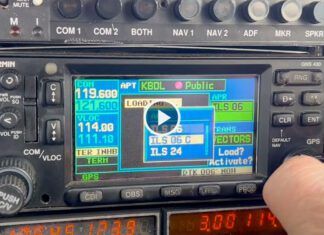
What we have is basically a David and Goliath sort of thing. Goliath, in this case, is Garmin International which sells no less than 28 model variants of its Nuvi-series GPS street navigators. The Davids—two of them, actually—are Control Vision and Bendix/King, who have just introduced GPS navigators that combine both aviation and street navigation functions. Are buyers really interested in these two capabilities in the same device? Evidently they are, given the number of requests we’ve received for a hurry-up look at these products. We examined the Bendix/King AV8OR Handheld in the September 2008 issue and for this report, we’ll look at Control Vision’s Anywhere Travel Companion, with a sideways glance at Garmin’s established GPSmap 396/495/496.

Budget Headset Tests: QFR, Gulf Coast Prevail
Just about everybody has one or more budget headsets. Perhaps you purchased one as your primary headset when you couldn’t afford anything fancier or you’ve bought them for passengers or as spares. Having reviewed ANR and pricier passive headsets in previous issues (see Aviation Consumer May and July 2007) we’re examining budget headsets in this report. As in earlier reports, all of the headsets we’ve evaluated are circumaural—they fit around your ear against the side of your head. At the budget end of the spectrum—in this case generally less than $150—the market leans towards house-branded headsets. In this case, Gulf Coast Avionics loaned us three of their house-branded headsets and we tested a LightSPEED QFR and the AVCOMM 200P. Pilot USA was unable to supply a headset in time for our testing. In our previous review of passive headsets, we tested the Flightcom Classic 4DLX in this price range so we’ve recapped those results. We measured the headsets in a professional audio lab, then subjected them to flight trials by a focus group. This has proven to be a successful way to evaluate headsets because in the end, how the headset sounds and its comfort level are what count most.

Cell-Phone Weather: No Perfect Solution Yet
Collecting, assimilating, and safely deciding what to do about weather is one of the hardest things we pilots do. But it seems like every computer platform to do this has a drawback. Weather terminals at FBOs are handy but require lots of clicks. I might drill down through many pages for METARs—a U.S. map, region map, and a state map—then scroll a long alphabetical list of stations. I go to more screens for TAFs, winds and temps, PIREPS, forecasts and satellite images. Then I try to picture the data on my route. For airport info, I pull out a book. Flight planning software puts all the weather around one route. But it requires a computer, software and, often, arduous setup and learning. Fine for home or office, but not ideal on the road. There are Web-based products to overlay METARs, TAFs, PIREPs and winds graphically on a route map. But evolution of cell phones into hand-held computers means there’s an even more convenient option. Here are the four leaders in cell phone weather. Note that your phone determines your choices or, perhaps, vice-versa.

Aircraft Engine Oil Changes: How Often?
It’s accepted wisdom that your engine will last longer if you change the oil frequently. If that’s true—and we’re as guilty as anyone for supporting whatever mythology applies—isn’t changing it more frequently even better? And what the heck does "frequently" really mean?Engine manufacturers have their own recommendations, which are sometimes hard to find and even harder to follow. But as far as we can tell, these are determined less by actual research-based findings than they are textbook recommendations from engineering manuals. So for this report, we set out to find out what the piston-engine aviation oil professionals who manufacture and sell the oil and the people who analyze the dirty stuff have to say. What do they recommend for the typical aircraft owner?

LSA Avionics Upgrades: No Shortage of Options
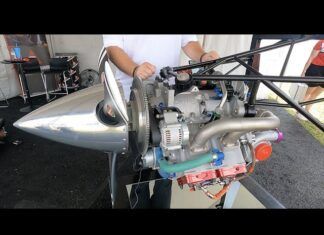
As Special Light Sport Aircraft (S-LSAs) begin to occupy more hangars and flight-school flight lines, attention is shifting to aftermarket avionics upgrades. Some owners take delivery with little more than a handheld transceiver, which will hardly cut it in the real world. For others, their checkbooks are simply tempted by a smorgasbord of gee-whiz gadgetry. Retrofitting LSAs is uncharted territory for most avionics shops and most of these lightweights might have unfamiliar engines and, in many cases, minimal electrical systems. LSAs are small, so available space and weight restrictions need to be considered. The rules for return-to-service following an upgrade are different for modern S-LSAs than what’s required of Part 23 aircraft or even a legacy aircraft LSA. What’s fine for your SportStar might not be legal for that vintage Ercoupe. Here are a handful of avionics retrofits suitable for the average S-LSA. Also, we’re talking mainly VFR missions here, while occasionally toying with light IFR if the airplane even has such approval. To be clear: While these machines are considered "little airplanes" by most standards, it’s futile to expect a light invoice for avionics work, even if the equipment is bargain-priced.

Cataract Surgery: Success for Many Pilots
Just when you’ve got a few decades of aviation experience under your slightly expanding belt, and have lost that wide-eyed rookie look … things start to look blurry and hazy. Every day. And then your doctor drops the hammer: You’ve got cataracts. But the news isn’t as bad as it could have been 30 years ago. Cataracts are fixable. A cataract occurs when the normal clarity of the lens of the eye is reduced, resulting in blurred, cloudy vision. These chemical changes are frequently caused by normal aging, but can also be caused by medications, injury, diseases, or environmental factors such as UV exposure or smoking. Cataracts usually occur in people 55 and older, and usually develop in both eyes, although at different rates. They impair your visual acuity in dim light, and also create light sensitivity and glare. Vision with a cataract is similar to looking through a steamy window. In addition to cloudy vision, cataracts also cause a number of other symptoms, such as dark shadows that seem to move with the eye (similar to "floaters," or loose cells within the fluid of the eyeball), the need to use more light to read, double vision, a loss of color vision, as well as increased nearsightedness as the lens becomes denser.

Used Aircraft Guide: Diamond Katana
Climb into your WABAC machine and set the dials for the mid-1990s. Once the whirring sounds and flashing lights stop, get out and glance around at what was then your local airport. Very different from today, huh? A lot of all-metal airplane designs, which hadn’t changed much in 40 or so years, right? If you’re lucky—or if you mis-set the machine’s controls for a couple of years later—you might see a curiosity: A T-tailed, all-composite, canopied two-seater with sailplane-like wings pulling duty as a trainer. That’s Diamond Aircraft’s DA20-A1 Katana, a sleek little machine with unmistakable European roots. The early, 81-HP Rotax-powered A1 Katanas at takeoff sounded like a sport motorcycle with a stuck throttle. Transitioning students steeped in Cessnas carried way too much speed into the flare. Good times. Since then, the DA20—in its C1 version—has evolved into what some might consider a more serious contender, thanks in part to a Continental IO-240B sporting 125 HP. Today, the DA20 soldiers on, training the next crop of pilots in fleet situations and in the traditional FBO/flight school environment. Gone is the Rotax, which on hot days made climbing to altitude a time-building experience, although you can still find A1 versions powered by it. On the used market, its years of service and by-now well-known maintenance and pilot requirements make it a worthy contender among the two-seat, tricycle-gear competition for a personal airplane.


Subscribe Today!

Get FREE Online Access to our complete online library including our airplane reviews!

Email:
First Name:
Last Name:
Address 1:
Address 2:
City:
State       Zip:

 
  Contact Us / Privacy Policy / Site Map
Copyright Belvoir Media Group, LLC. All rights reserved.